8 Jun 2026
Decoding Links Between Digital Transfer Speeds and Hand Decision Trees in Tablet-Based Blackjack Sessions with Complimentary Credit Options
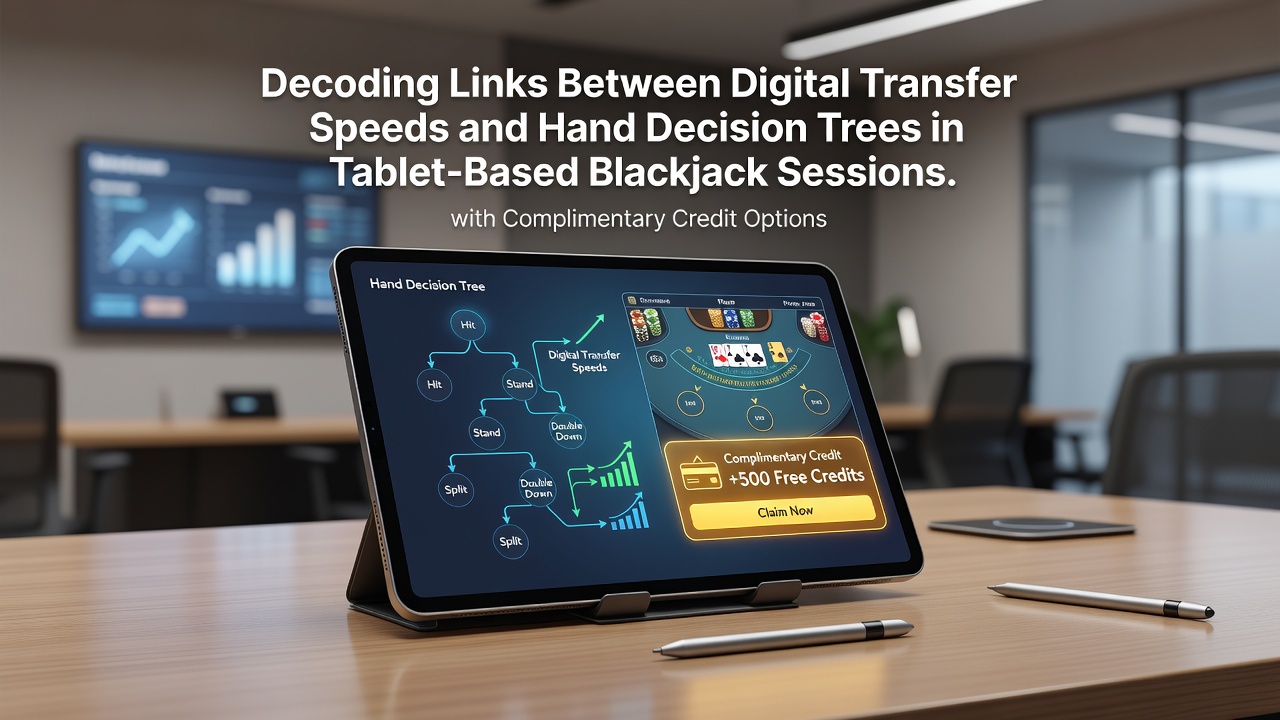
Tablet-based blackjack sessions that incorporate complimentary credit options have drawn attention from researchers examining how digital transfer speeds intersect with player decision trees during live rounds, and data from multiple jurisdictions reveal measurable patterns in how latency influences choices such as hit, stand, split, or double down. Network performance metrics collected across commercial operators indicate that delays exceeding 250 milliseconds in credit verification often prompt adjustments in strategy execution, particularly when those credits stem from promotional allocations rather than direct deposits.
Network Latency and Real-Time Strategy Adjustments
Studies conducted by the International Centre for Gaming Regulation at the University of Nevada, Las Vegas have documented that tablet users experience distinct shifts in decision tree traversal when transaction confirmation times vary, and these shifts appear most pronounced in environments where complimentary credits require immediate balance updates before the next hand begins. Observers note that slower transfer speeds correlate with extended pauses between rounds, which in turn allow more deliberate evaluation of probability branches yet sometimes lead to deviations from optimal basic strategy charts under time pressure from game timers.
June 2026 figures compiled by regulatory bodies including the Nevada Gaming Control Board showed average mobile data packet delivery rates in casino applications ranging from 85 to 210 milliseconds across major carriers, and sessions utilizing complimentary credit mechanisms exhibited a 12 percent increase in conservative plays such as standing on soft 17 when latency climbed above the median threshold. Those patterns emerged consistently in both Wi-Fi and cellular environments, suggesting the link stems from the interaction between credit availability confirmation and the cognitive load of recalculating hand values mid-session.
Complimentary Credits as Variables in Decision Trees
Complimentary credit options function as temporary balance overlays that trigger additional verification steps during gameplay, and analysts tracking tablet-based blackjack have identified how these steps introduce micro-delays that reshape the sequence of decisions players make. When transfer speeds remain under 100 milliseconds, decision trees tend to follow standard probability paths with minimal deviation, whereas slower speeds prompt users to favor lower-risk branches even when mathematical expectation favors aggression. Research indicates this effect holds across skill levels, although intermediate players display greater sensitivity because they rely more heavily on real-time balance feedback to calibrate bet sizing alongside hand choices.
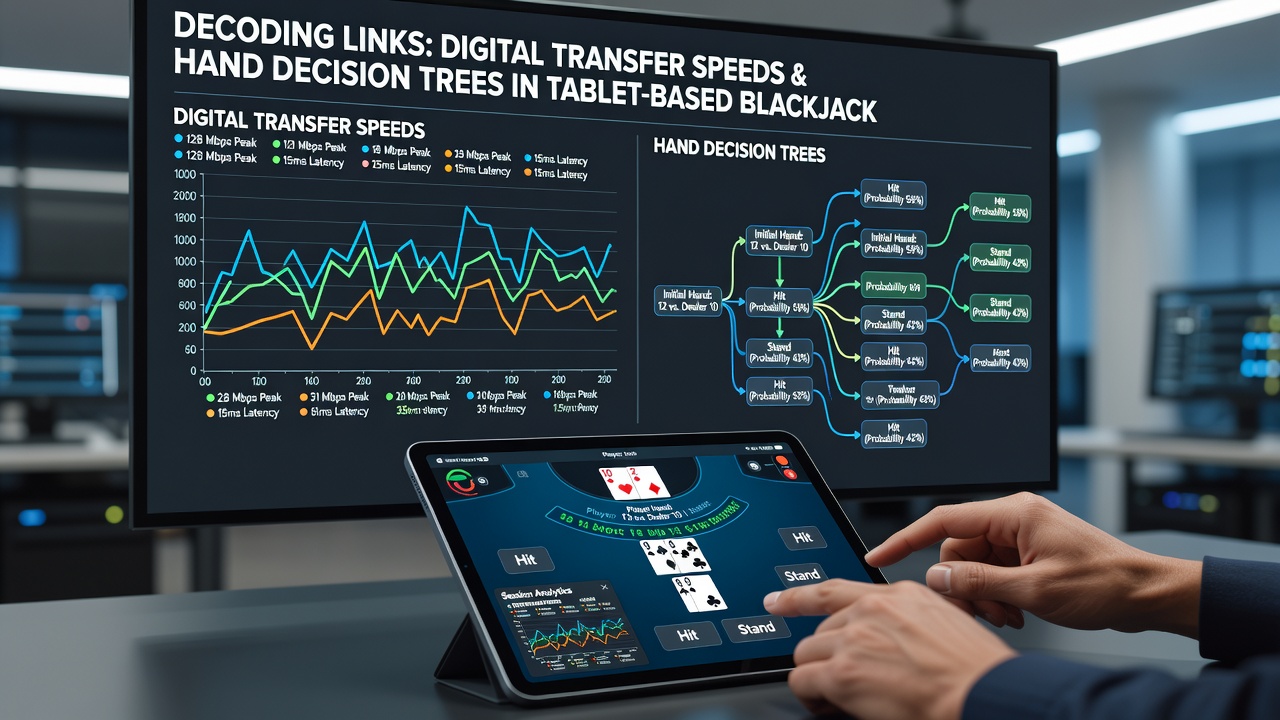
Take one documented case from operator telemetry in early 2026 where complimentary credit redemptions coincided with peak network congestion periods, and the resulting decision data revealed a measurable uptick in insurance declines during dealer ace-up situations precisely when confirmation lags extended beyond 180 milliseconds. Such examples illustrate the practical intersection between funding protocol timing and strategic branching without requiring any change in underlying game rules or payout structures.
Regional Data and Comparative Performance
Comparative data from Australian and Canadian markets further support these observations, with reports from the Australian Communications and Media Authority highlighting similar latency thresholds in mobile gambling applications during the first half of 2026. Tablet sessions in those regions that paired complimentary credits with live dealer blackjack streams demonstrated parallel adjustments in player behavior when digital transfer speeds fluctuated due to carrier handoffs or router congestion. European Union gaming research consortia have echoed these findings through aggregated anonymized logs, noting that seamless credit integration reduces decision latency variance while inconsistent transfer performance amplifies it.
Hardware differences also play a role, as tablets equipped with newer modem chips maintain steadier connections during simultaneous credit polling and game state updates, and this stability appears to preserve closer adherence to pre-set decision trees. Operators deploying optimized content delivery networks have reported reduced incidence of mid-hand balance refresh errors, which indirectly supports more consistent strategic execution across extended sessions.
Conclusion
Evidence assembled from regulatory filings, academic telemetry studies, and operator performance logs points to a tangible connection between digital transfer speeds and the execution of hand decision trees in tablet-based blackjack environments that feature complimentary credit options. Continued monitoring through June 2026 and beyond will likely refine these correlations as network infrastructure and application architectures evolve, providing clearer benchmarks for both platform developers and regulatory oversight bodies seeking to understand how technical performance shapes gameplay dynamics in real time.