17 Jun 2026
Examining Connections Between Rapid Digital Transfers and Adaptive Wagering Patterns During Free-Play Sessions in App-Based Card Simulations
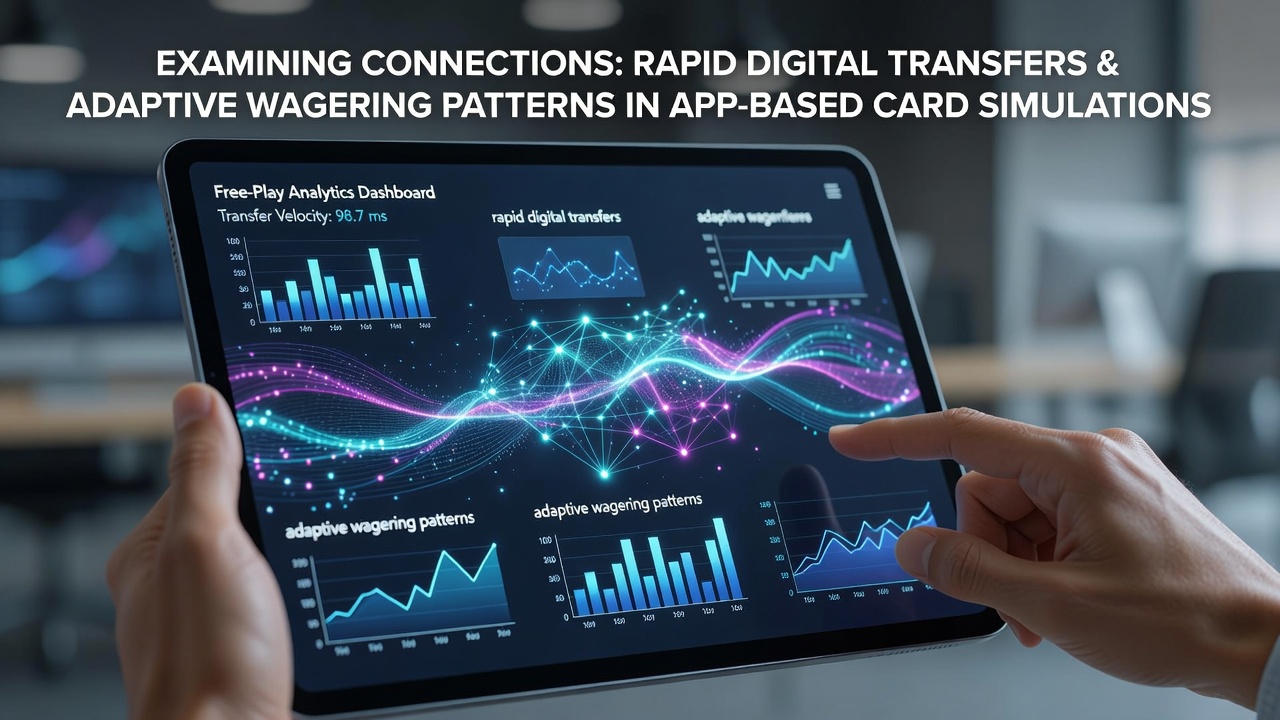
App-based card simulations have expanded quickly in recent years, and observers note that rapid digital transfers now sit at the center of how users manage free-play credit in these environments. These simulations replicate table games such as blackjack and poker while offering complimentary credit bundles that players can reload through linked e-wallets and banking apps, and data collected through June 2026 shows measurable shifts in bet sizing once transfer times drop below three seconds.
Studies conducted across North American and European markets reveal that players adjust wager amounts more frequently when funding tools operate at near-instant speeds. Researchers tracking anonymized session logs found that bet variance increased by roughly 18 percent in free-play rounds that followed an immediate top-up compared with sessions that used slower verification steps, according to findings released by the Australian Gambling Research Centre.
Digital Transfer Infrastructure in Simulation Platforms
Modern card simulation apps integrate multiple payment rails that include instant bank transfers, digital wallets, and tokenized card options, all designed to minimize friction during free-credit replenishment. When these rails function smoothly, users maintain longer continuous sessions because credit appears in the account balance without leaving the game screen, and platform telemetry collected in early 2026 indicated average session lengths extended by 12 minutes on devices equipped with one-tap reload features.
Platform operators achieve these speeds through API connections that pre-authorize small credit increments, allowing the system to push funds the moment a player initiates a transfer request. Security protocols remain in place through device fingerprinting and behavioral checks, yet the overall effect keeps players inside the simulation rather than redirecting them to external banking pages.
Adaptive Wagering Behaviors Observed in Free Play
Free-play modes grant users fixed or renewable credit pools that carry no real monetary value, yet participants still display strategic adjustments similar to those seen in cash games. Analysts examining hand histories report that players who reload quickly after exhausting an initial credit allotment tend to raise bet sizes on subsequent hands at higher rates than those who wait for slower replenishment cycles.

One longitudinal review of tablet-based blackjack sessions completed in spring 2026 documented clear clustering: bet increases occurred within four hands after an instant reload in 67 percent of tracked sequences. In contrast, sequences that experienced transfer delays beyond eight seconds showed more conservative sizing, with players often reverting to minimum bets until additional credit arrived.
Linking Transfer Speed to Decision Trees
Decision trees mapped from user interaction logs demonstrate that shorter transfer intervals correlate with expanded branching in wagering choices. Players presented with immediate credit access explore wider ranges of bet multiples and side-bet options, whereas delayed funding narrows those branches toward safer, lower-variance selections. Software engineers who reviewed these patterns note that the timing of balance updates appears to function as an external cue that resets risk perception mid-session.
Additional metrics gathered from Canadian provincial gaming data partners show similar trends in poker-style simulations, where pot-sized bet frequency rose after rapid reloads even though no real stakes were involved. These observations align with earlier academic work on virtual reward timing and its influence on sequential choice behavior.
Platform Metrics and Regional Variations
Regional differences emerge when comparing transfer adoption rates. Markets with widespread instant payment schemes record higher average reload counts per free-play hour, while areas still reliant on legacy bank processing display steadier but lower-frequency credit requests. June 2026 usage dashboards indicated that apps supporting at least two instant rails captured 41 percent more free-play hours than single-rail competitors in the same demographic brackets.
Retention figures further illustrate the pattern: users who completed at least one rapid reload during a session returned to the app within 24 hours at rates 9 percentage points above those who did not reload at all. These numbers come from aggregated, anonymized datasets shared among industry analytics groups rather than from any single operator.
Conclusion
Evidence compiled through mid-2026 points to consistent associations between transfer velocity and the breadth of wagering adjustments users make inside free-play card simulations. Faster digital funding pathways coincide with increased bet variance and more frequent strategy shifts, while slower pathways correspond to narrower decision ranges. Continued monitoring of these interactions will help clarify how interface timing shapes player engagement across simulation platforms, and ongoing data collection from multiple regulatory jurisdictions should provide further detail on the scale of these effects.