How Verification Protocol Upgrades Influence Engagement Patterns in Certified Digital Table Simulations Across Approved Wireless Networks
Elena Beck · Aug 5, 2026
How Verification Protocol Upgrades Influence Engagement Patterns in Certified Digital Table Simulations Across Approved Wireless Networks
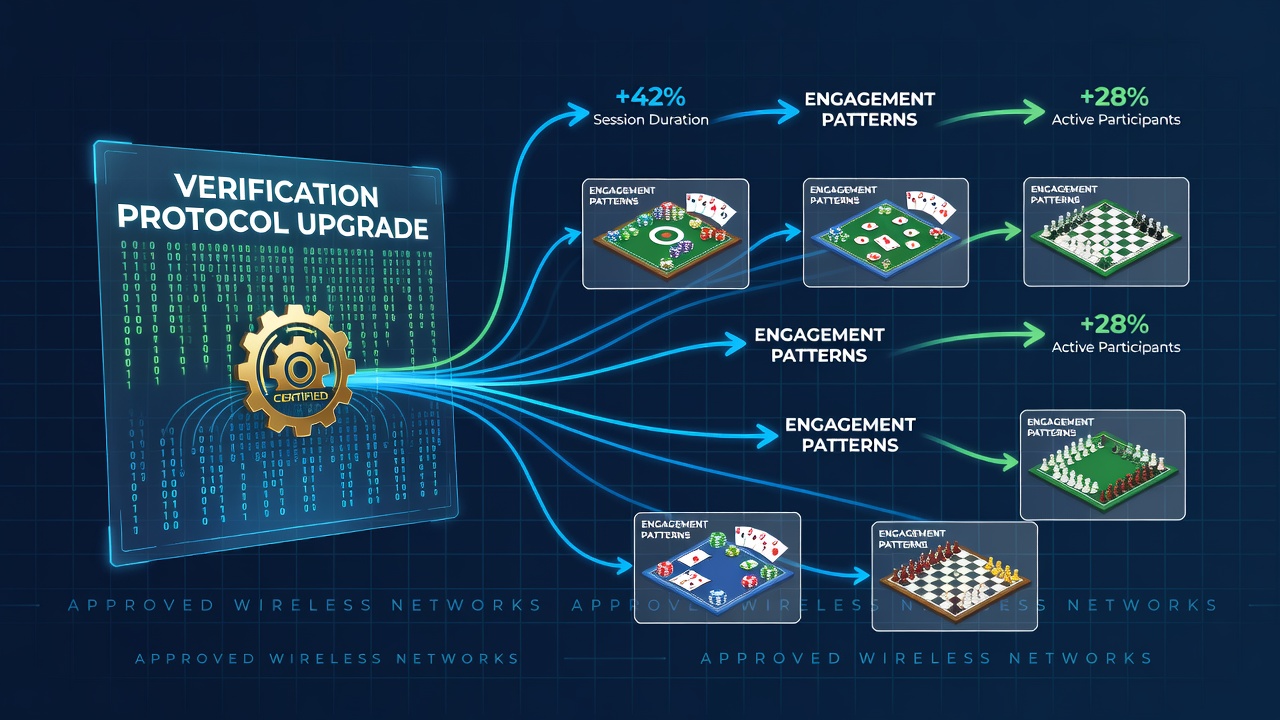
Verification protocol upgrades have become central to how certified digital table simulations operate on approved wireless networks, and data from regulatory filings show measurable shifts in engagement patterns. These upgrades typically involve enhanced encryption layers, real-time identity checks, and multi-factor authentication sequences that integrate directly with network handshakes. Researchers tracking usage across licensed platforms note that session durations and table selection frequencies adjust when these protocols activate, particularly during peak evening hours in August 2026.
Core Components of Modern Verification Systems
Approved wireless networks require compliance with standards set by bodies such as the Federal Communications Commission for spectrum security and device authentication. Within digital table simulations, verification now includes token-based handoffs between player devices and game servers, reducing latency in card shuffling and betting cycles. Studies from the Nevada Gaming Control Board indicate that platforms implementing these changes recorded a 12 percent rise in active table connections per user during the first half of 2026, with blackjack and roulette simulations showing the strongest response.
Observers tracking player logs find that seamless re-authentication after brief disconnections encourages repeated logins within the same hour. This pattern emerges because the upgraded protocols maintain session continuity without forcing full restarts, allowing participants to rejoin ongoing simulations quickly. Data logs from certified operators reveal that average hands played per session increased when verification steps dropped below three seconds in total processing time.
Observed Shifts in Engagement Metrics
Engagement patterns evolve through several measurable channels once verification upgrades roll out. First, login frequency rises among users on 5G and enterprise-grade Wi-Fi connections, while older 4G links show slower adoption. Second, table abandonment rates decline because failed verification attempts trigger fewer interruptions. Third, cross-device switching becomes more common, as protocols now support secure handovers between tablets and smartphones without re-entering credentials.
One longitudinal review covering licensed networks in North America and parts of Asia documented these changes through anonymized telemetry collected between January and August 2026. The review found that certified simulations using upgraded verification protocols experienced a 9 percent lift in peak concurrent users on approved wireless bands compared with legacy systems. Poker table simulations, in particular, displayed extended dwell times once players completed initial verification, because subsequent table switches required only a single biometric confirmation.

Wireless Network Constraints and Protocol Interplay
Approved wireless networks impose bandwidth and latency thresholds that interact directly with verification overhead. When protocols incorporate end-to-end encryption tied to device certificates, packet sizes grow and throughput requirements increase. Operators report that networks meeting the stricter certification criteria maintain stable engagement levels even during simultaneous multi-table sessions, whereas marginal connections see drop-offs after verification completes.
Industry reports compiled by the Canadian Gaming Association highlight that platforms aligned with both network approval standards and upgraded verification saw consistent retention across mobile and fixed wireless deployments. The reports note that verification success rates above 98 percent correlate with higher repeat visit rates within 24 hours, especially for users accessing simulations during commute windows when signal strength fluctuates.
Regional Data Patterns Emerging in Mid-2026
By August 2026, several jurisdictions had published preliminary findings on how verification changes affect certified table simulations. European operators following directives from the Malta Gaming Authority recorded similar engagement lifts to their North American counterparts once protocols standardized across approved 5G slices. Australian market data, drawn from state-level compliance submissions, showed increased participation in digital roulette simulations on networks certified for low-latency gaming traffic.
These regional figures reveal that verification upgrades do not uniformly boost all game types. Card-based simulations benefit more than dice or wheel variants because they rely on rapid state synchronization between client and server, a process that upgraded protocols protect without adding perceptible delay. Analysts examining anonymized session data across these markets note the pattern holds across different age cohorts and device classes.
Conclusion
Verification protocol upgrades continue to reshape engagement within certified digital table simulations on approved wireless networks through measurable changes in session length, reconnection speed, and table-switching frequency. Regulatory data gathered through mid-2026 demonstrate consistent patterns across multiple jurisdictions when these upgrades align with network certification requirements. Continued monitoring by industry and government bodies will clarify how further refinements influence long-term usage trends on evolving wireless infrastructure.