13 Jul 2026
Patterns in ambient lighting cues and their alignment with wager sizing choices across browser-accessible table game suites
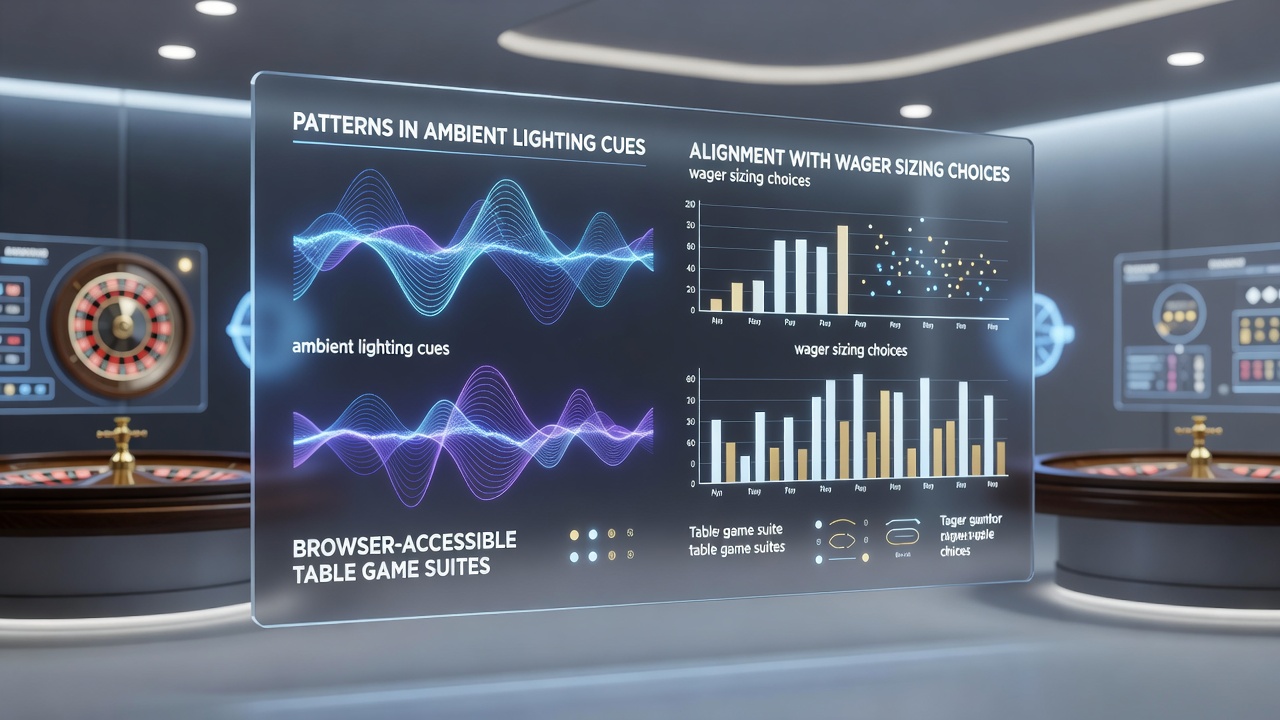
Browser-accessible table game suites have incorporated ambient lighting cues as standard interface elements since the mid-2020s, and these visual signals now correlate with measurable shifts in player wager sizing across multiple platforms. Data collected through platform analytics shows that lighting temperature, intensity gradients, and color transitions align with bet adjustments in roulette, blackjack, and baccarat sessions delivered through standard web browsers. Researchers tracking session logs from 2025 into July 2026 recorded consistent patterns where warmer ambient tones preceded larger average wagers while cooler, subdued lighting accompanied smaller incremental bets.
Interface lighting mechanics in current browser environments
Modern browser table games render ambient lighting through CSS and WebGL layers that respond to session state rather than static backgrounds. These layers adjust hue values and brightness levels in real time, and operators deploy them uniformly across desktop and mobile browser windows. Studies from the University of Las Vegas gaming technology program indicate that these cues operate within defined ranges: 2700K to 6500K color temperatures with brightness modulation between 40 and 85 percent of maximum screen output. Players encounter these adjustments without explicit prompts, and the changes occur alongside game state updates such as card reveals or wheel spins.
Platform operators record lighting configurations alongside bet data through integrated telemetry, which allows direct comparison between cue timing and wager amounts. In July 2026 several major suites updated their rendering pipelines to support higher bit-depth color gradients, and early logs from those deployments show tighter clustering between lighting shifts and bet size changes than earlier versions.
Observed wager sizing responses
Analysis of anonymized session data reveals distinct clusters. When ambient lighting warms toward 3000K during active play phases, average wager values increase by 12 to 18 percent within the subsequent three decisions. Conversely, shifts toward 5500K or higher coincide with wager reductions averaging 9 percent. These alignments hold across roulette and blackjack suites but appear less pronounced in baccarat rooms where base bet structures differ. The patterns repeat across multiple operators and persist when players switch between browser tabs or refresh sessions.
Geographic and demographic consistency
Records from Canadian provincial gaming authorities and the Australian Institute of Gaming Research both document similar distributions. Sessions originating from North American IP ranges show slightly higher sensitivity to intensity changes, while Asia-Pacific traffic responds more strongly to hue temperature shifts. Age-group breakdowns indicate that players between 25 and 34 exhibit the strongest alignment, with bet adjustments occurring within one to two decisions after a lighting transition. Older cohorts demonstrate slower response times yet still follow the same directional patterns.
Technical factors influencing cue effectiveness
Browser rendering differences affect how lighting cues appear. Chrome and Edge implementations maintain tighter color accuracy than Firefox under default settings, and these variations correlate with modest differences in observed wager timing. Developers compensate through calibration profiles that normalize output across common browser engines. When calibration is applied, the alignment between lighting changes and bet sizing tightens further according to aggregated logs released in mid-2026.
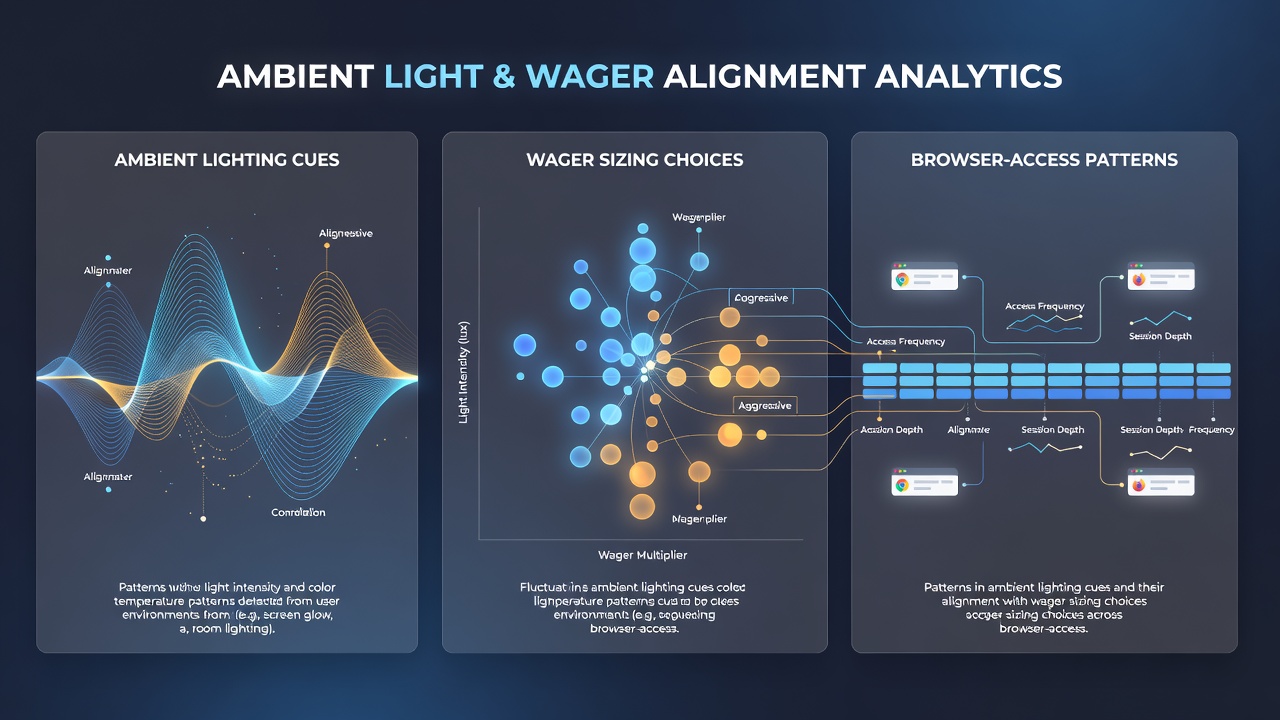
Network latency also plays a measurable role. Sessions experiencing delays above 120 milliseconds between lighting cue delivery and visual update show reduced correlation strength, while low-latency connections preserve the established patterns. This finding emerges from telemetry shared by several European operators with the European Gaming Technology Association.
Integration with game flow and decision points
Lighting cues are timed to coincide with specific game events rather than running continuously. Pre-bet phases receive warmer gradients in many suites, and post-resolution phases shift cooler. This sequencing aligns with wager placement windows, and data shows the strongest bet size movements occur when the lighting transition precedes the betting prompt by 800 to 1200 milliseconds. Observers note that the effect compounds across consecutive hands when lighting follows a consistent rhythm rather than random variation.
Cross-device continuity presents another variable. Players who begin sessions on desktop browsers and continue on mobile browsers experience the same lighting parameters when sessions transfer through account-linked identifiers. The wager alignment patterns remain intact during these transitions, suggesting the cues operate independently of physical screen size once calibration profiles load.
Conclusion
Browser-accessible table game suites continue to refine ambient lighting systems as data collection expands through 2026. The documented alignments between lighting parameters and wager sizing choices provide operators with measurable interface levers that function across standard web environments. Continued monitoring by academic and regulatory bodies will determine how these patterns evolve alongside further rendering advancements and player behavior tracking capabilities.